Lesson 3: Marketing Channels in the Digital Age
Watch the Video Below
Recap of Lesson 2’s Activity: AI’s Role in Digital Marketing Channels
In Lesson 2, you tracked real-world AI-driven marketing encounters.
You might have noticed:
- A personalised email suggesting products you were interested in.
- A chatbot answering your questions while browsing an online store.
- A product recommendation based on your past purchases.
- A targeted ad appearing on Instagram or YouTube after you searched for something similar.
These experiences weren’t random—they were powered by AI. But they also happened across different marketing channels.

Think Point
Did AI influence how you engaged with a brand? Was it through a search engine, a social media ad, an email, or a chatbot? Understanding where these interactions happen is essential for businesses to create the right marketing mix. Now, let’s explore the digital marketing channels that brands use to connect with customers.
SEO (Search Engine Optimisation): strategy to improve a website’s visibility organically (without paying for ads). Example: A fitness brand optimising blog posts so they appear when users search for "best home workouts."
SEM (Search Engine Marketing): Paid advertising on search engines (e.g., Google Ads) to target specific keywords. Example: A travel agency running a Google Ad for “affordable flights to Bali.”
Why it matters: Search engines drive high-intent traffic—people actively looking for solutions.
Refer to the Image Below
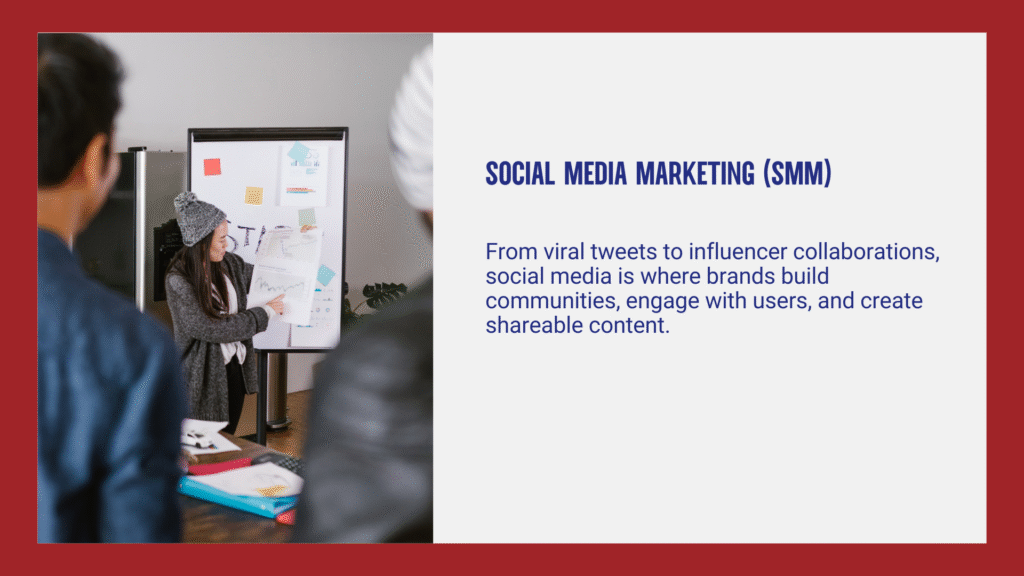
Paid Social Ads: Sponsored content targeted to specific demographics. Example: A beauty brand running a Facebook ad campaign to reach users interested in skincare.
Organic Social Media: Unpaid content like posts, videos, and stories to grow brand awareness. Example: A startup posting behind-the-scenes TikTok videos to showcase its journey.
Why it matters: Social media is interactive and community-driven, making it a powerful tool for engagement.
Refer to the Image Below
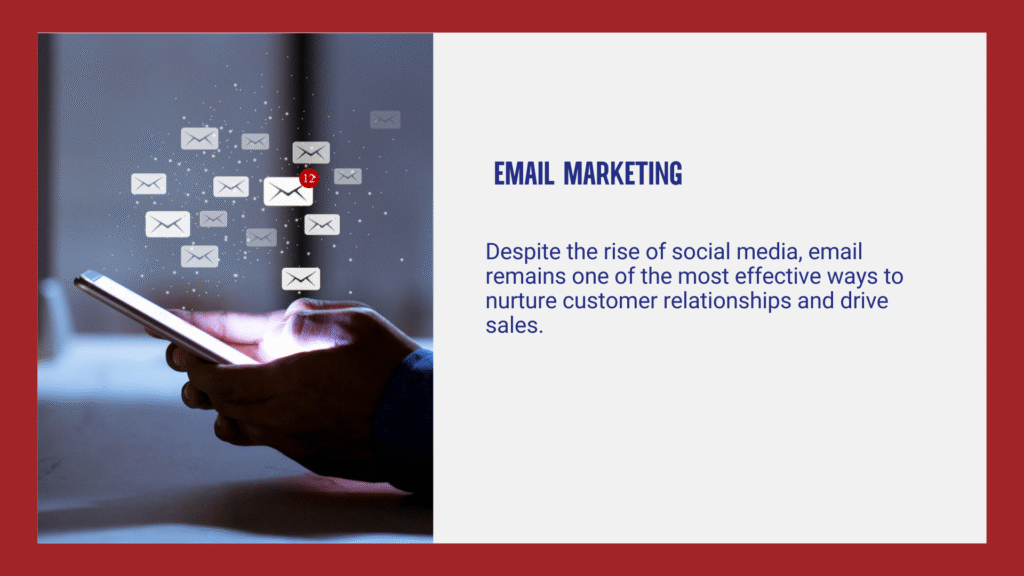
Personalised Email Campaigns: Tailoring content based on user behaviour. Example: An e-commerce store sending a discount email to a customer who abandoned their cart.
Automated Sequences: Emails triggered by specific actions. Example: A welcome email series when a user signs up for a newsletter.
Why it matters: Email marketing has high ROI and allows direct communication with customers.
Refer to the Image Below
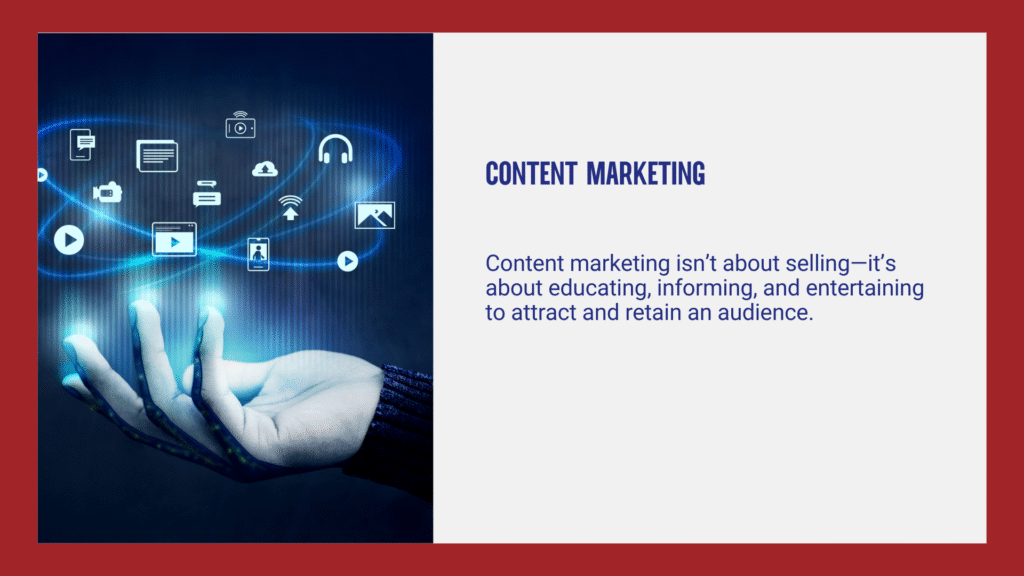
Blogging & Articles: Helping users find valuable information. Example: A tech company writing an article on “The Future of AI in Business.”
Video Marketing: Engaging storytelling through platforms like YouTube, TikTok, and Instagram. Example: A cooking brand posting tutorial videos on easy dinner recipes.
Podcasting: Audio content to build brand authority. Example: A business coach launching a podcast on entrepreneurship tips.
Why it matters: Great content builds trust, credibility, and brand authority.
Refer to the Image Below
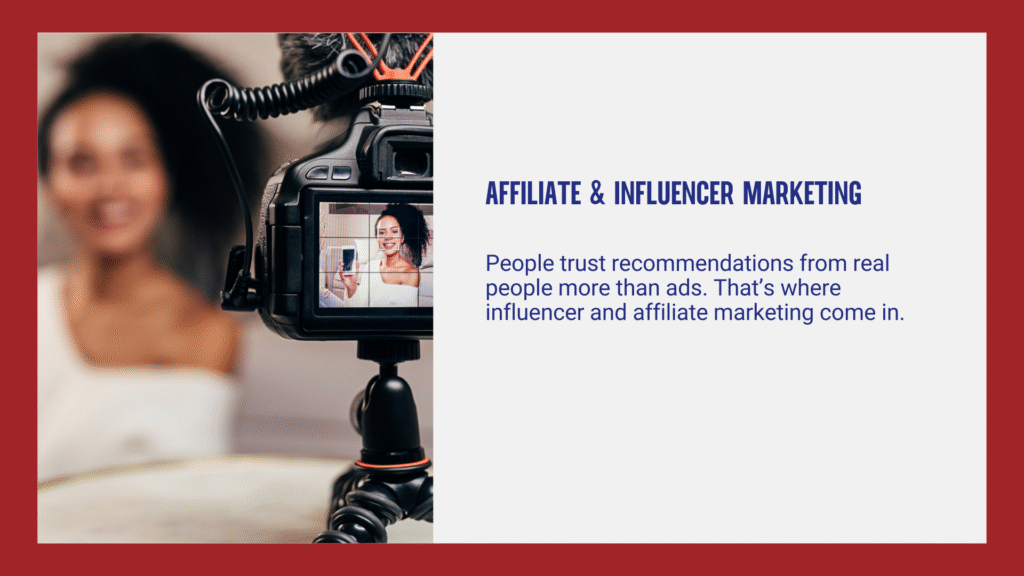
Influencer Collaborations: Partnering with creators who have engaged audiences. Example: A sports brand sponsoring a fitness influencer’s Instagram post.
Affiliate Marketing: Paying commissions to partners who drive sales through their content. Example: A tech blogger linking to an e-commerce site and earning a percentage of sales.
Why it matters: Leveraging trusted voices can significantly boost brand awareness and credibility.
Choosing the Right Marketing Mix
Not all channels work for every business. The key is to select the right mix based on:
Your Target Audience: Where do they spend their time?
Your Business Goals: Do you want to build brand awareness, generate leads, or increase sales?
Your Budget: Paid ads can be effective, but organic strategies (SEO, content) offer long-term value.
Example Scenarios
Not all channels work for every business.
The key is to select the right mix based on:
The best strategies combine multiple channels to create a seamless customer journey.
The key is to select the right mix based on:
- A fashion brand targeting Gen Z? → Focus on TikTok & Instagram marketing.
- A B2B company selling software? → Invest in LinkedIn, content marketing, and email campaigns.
- A local restaurant looking for customers? → Leverage Google Search, Instagram, and influencer marketing.
The best strategies combine multiple channels to create a seamless customer journey.
Case Study: How Starbucks Uses Multiple Marketing Channels
Click Through the Slides Below
Identify the Digital Marketing Channels
Click on all the Digital Marketing Channels Below
Activity: Mapping Your Multi-Channel Experience
Download the Activity Attachment Below

Think Point
Which marketing channel do you engage with the most, and why?
Completing this In-Lesson Task does not contribute to the assessment grading and serves as preparation for the final assessment.