Lesson 5: Ethical Considerations in Digital Marketing and AI
Watch the Video Below
Recap of Lesson 4’s Activity: Tracking Your Buyer’s Journey
In the last lesson, you reflected on how digital marketing influenced your recent buying decisions. You might have noticed:
.
Think back to your experience:
but they also raise important ethical questions about how data is collected, used, and interpreted.
Think back to your experience:
- Retargeting ads following you across platforms after browsing a product (data tracking).
- AI-driven recommendations influencing your choices (personalised marketing).
- Social proof (reviews, influencer content) affecting your trust in a brand.
- Did you feel comfortable with how brands used your data?
- Were the ads and recommendations helpful or did they feel intrusive?
- Did you notice any signs of bias—such as seeing certain ads based on your demographic or search history?
but they also raise important ethical questions about how data is collected, used, and interpreted.
Data Privacy and Security in Digital Marketing
Why Data Privacy Matters
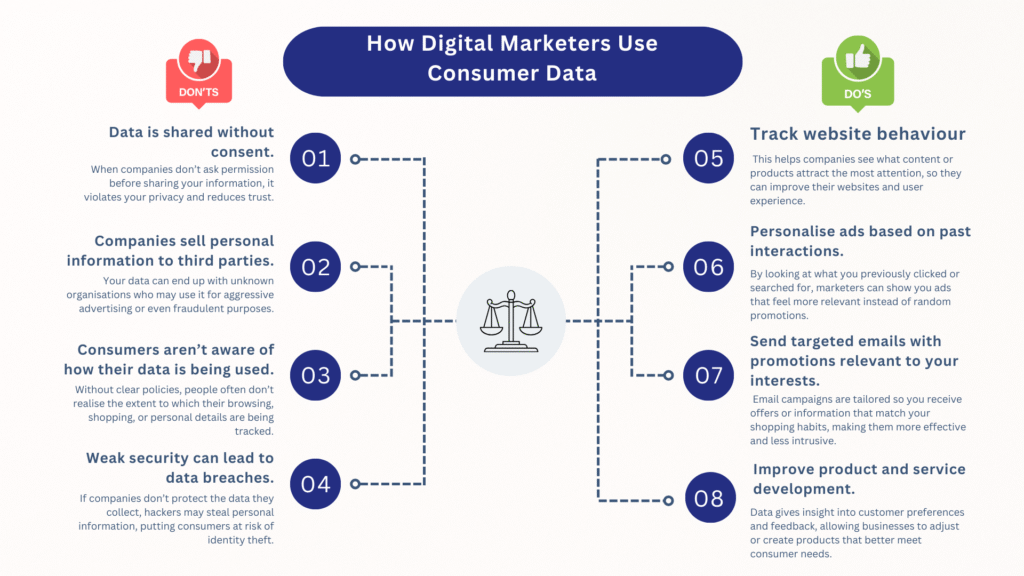
Every time you browse a website, sign up for an email list, or engage with social media, companies collect your data. While this helps improve personalisation, it also creates concerns about:
- How secure is your personal information?
- Who has access to it?
- Is it being used transparently and ethically?
Refer to the Image Below
AI’s Role in Data Privacy
Refer To The Image Below:
Bias and Fairness in AI Tools
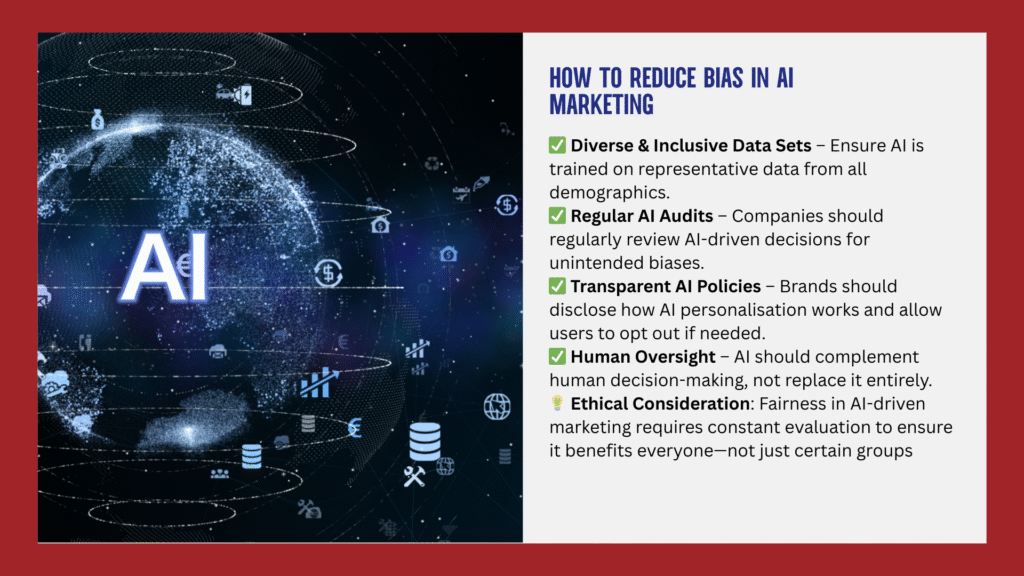
AI isn’t always fair. It learns from historical data, which means if the data is biased, the AI’s decisions will be biased too. This is a major concern in digital marketing, where AI-driven ads and content recommendations can reinforce unfair targeting, discrimination, or exclusion.
Job Ads Favoring Certain Demographics – AI might show high-paying job ads only to certain genders or age groups.
Racial or Cultural Bias in Ad Targeting – Some AI systems exclude or prioritise audiences based on race or ethnicity.
Pricing Discrimination – Dynamic pricing algorithms might charge different prices to different people based on perceived purchasing power.
The Problem:
AI doesn’t make decisions on its own—it reflects the biases in the data it was trained on. If marketers don’t check for bias, AI can unintentionally discriminate.
Refer to the Image Below
Case Study: Facebook’s Advertising Algorithm and Bias Concerns
Click Through the Slides Below
Activity: Ethical Marketing in Your Digital World
Download the Activity Attachment Below

Think Point
Have you ever seen an ad that felt invasive or unfair? How do you think brands can create a better balance between personalisation and ethics in digital marketing?
Completing this In-Lesson Task does not contribute to the assessment grading and serves as preparation for the final assessment.